Water Heater Flush and Drain Valve Upgrade on a Hard Water System
Hard water is tough on water heaters. Over time, minerals like calcium and magnesium settle at the bottom of the tank, building up into a layer of sediment that makes your system work harder than it needs to. That means higher energy bills, inconsistent hot water, and a shorter lifespan for the unit overall.
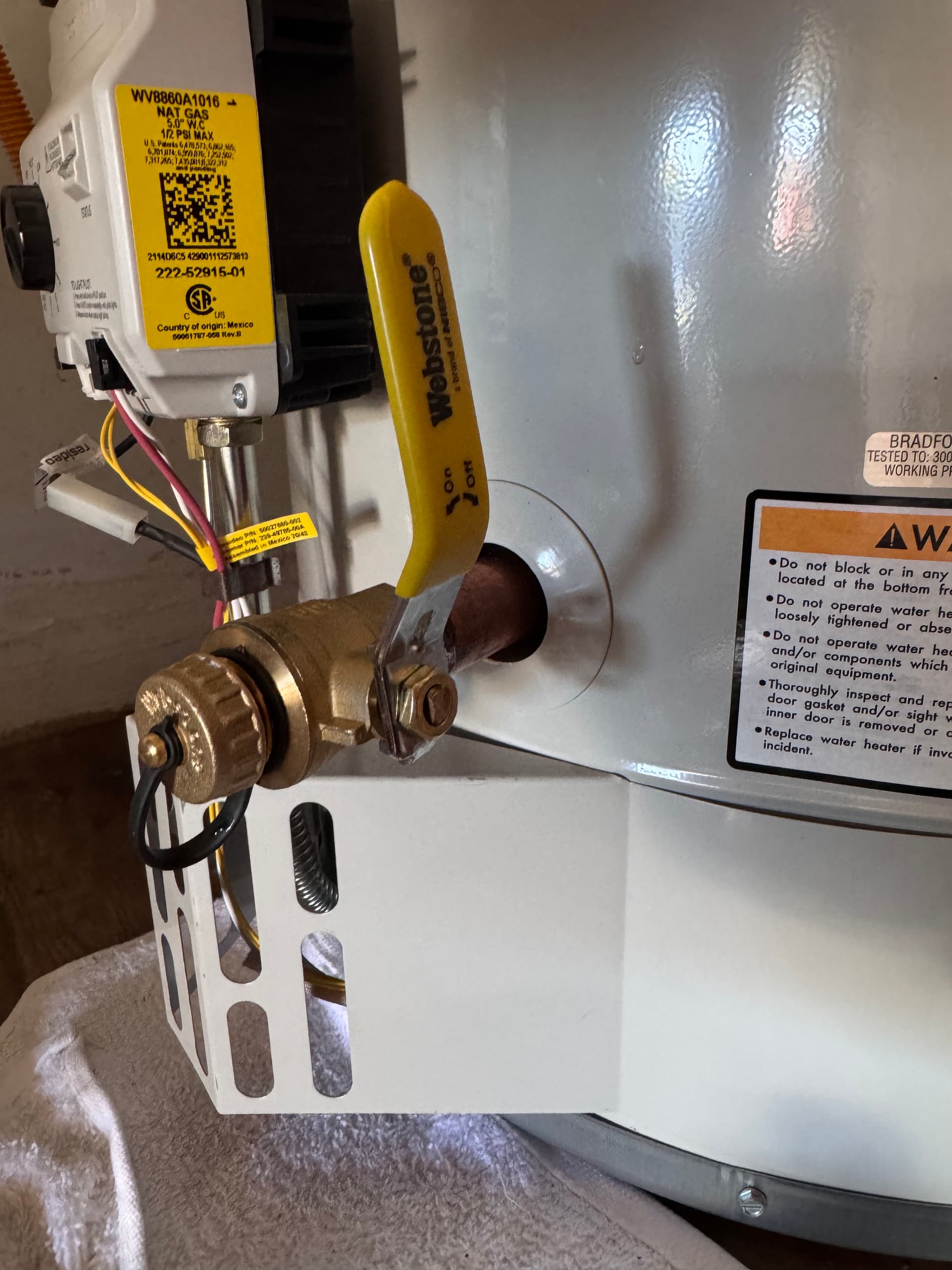
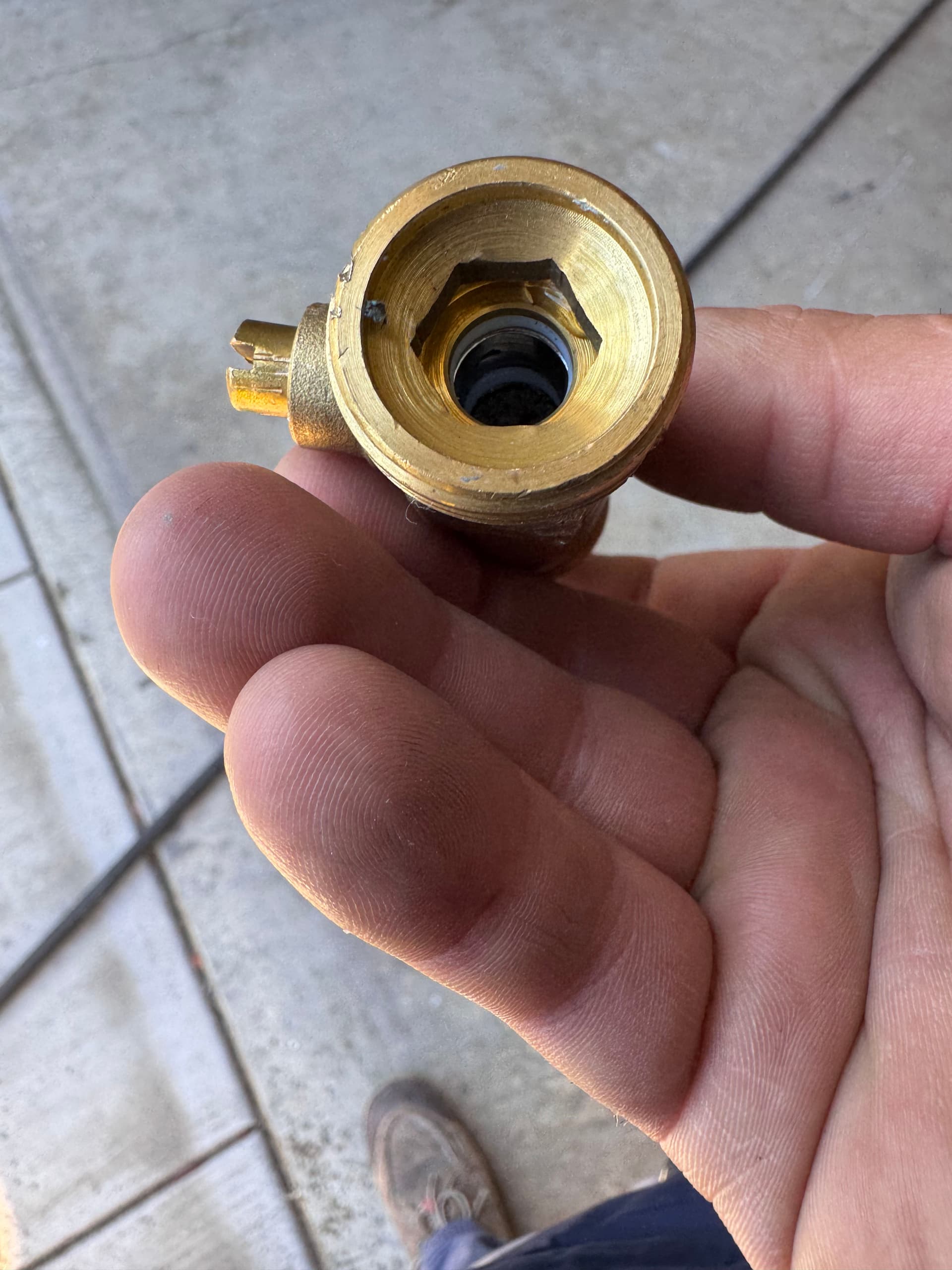
On this job, that's exactly what we were dealing with. The old drain valve - a small plastic factory-installed piece - was already partially clogged and barely functional. That kind of restriction makes a proper flush nearly impossible, so the first order of business was swapping it out. We replaced it with a full-port brass ball valve, which gives a much wider opening and a clean quarter-turn shutoff. Night and day difference when it comes to actually draining the tank.
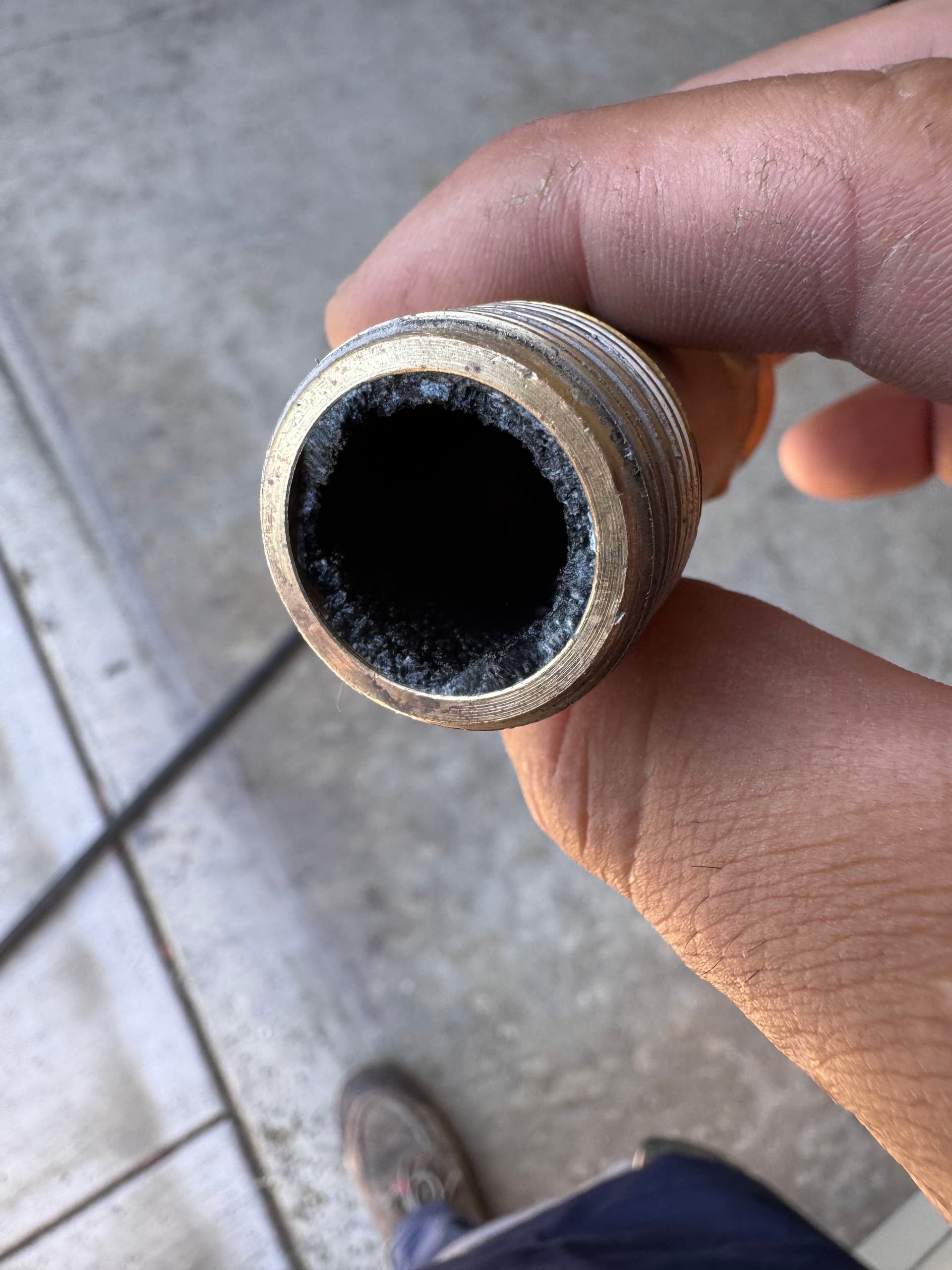
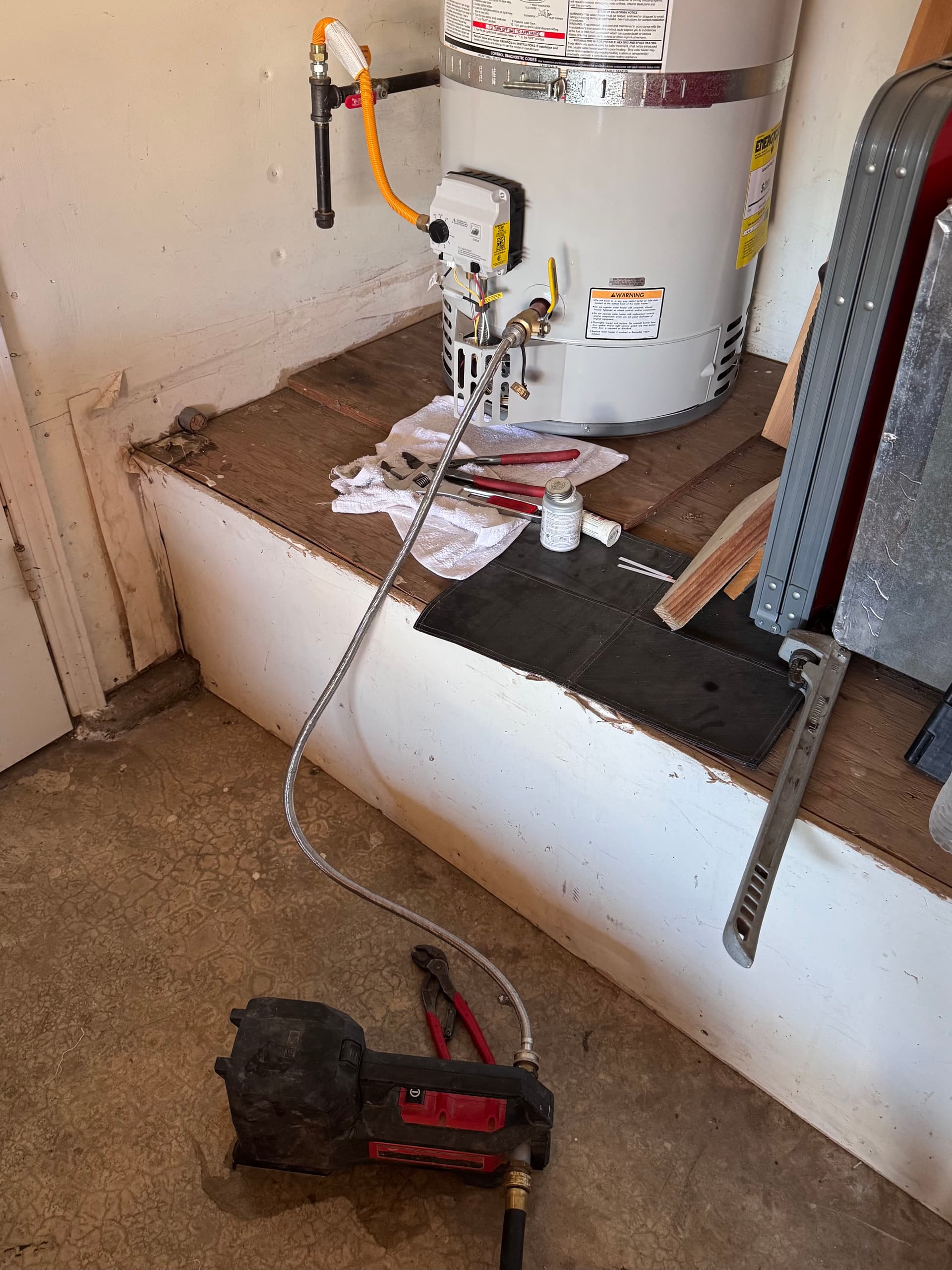
With the new valve in place, we ran a full flush to clear out the built-up sediment. The old valve we pulled told the whole story - the opening was almost completely choked with mineral deposits and corrosion. That kind of blockage doesn't happen overnight, and it's a good reminder of why routine maintenance matters, especially in areas with hard water.
After the flush, the system was left in solid shape - clean, properly drained, and set up for easier service in the future. The Webstone brass ball valve we installed is a quality upgrade that makes the next flush or repair visit far more straightforward. Small upgrade, big payoff when it comes to long-term reliability.
If your water heater hasn't been flushed in a while - or if you're not even sure the drain valve still works - it's worth getting it looked at. Sediment buildup is one of the most common and preventable causes of early water heater failure, and catching it early is a whole lot cheaper than a full replacement.